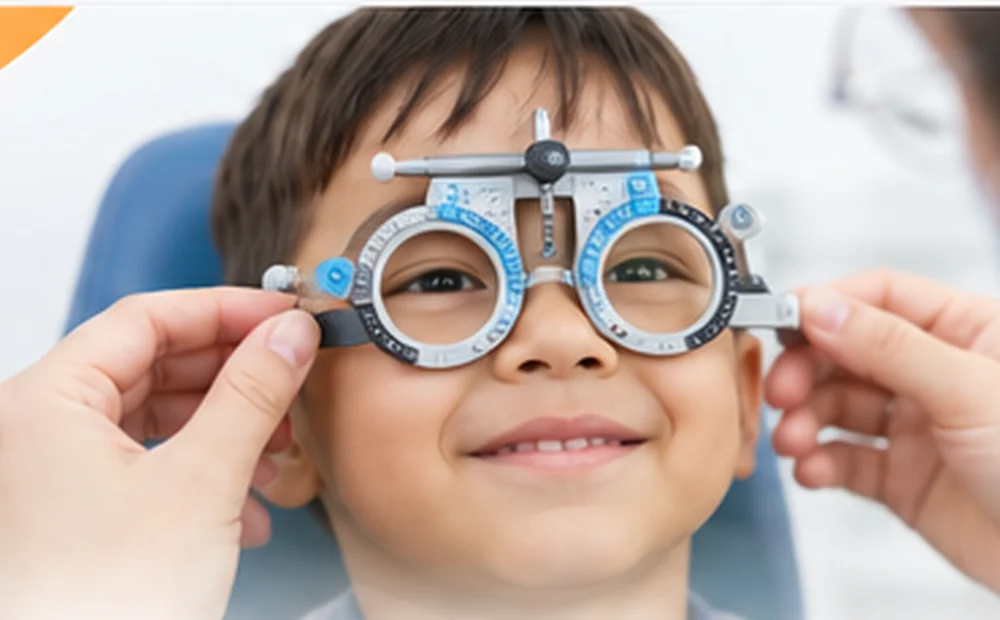
Healthy visual development depends on timely screening and follow-up.
Children’s eye care requires age-appropriate examination and early attention to visual development. Gupta Eye Center provides assessment for concerns such as refractive error, amblyopia, strabismus and other childhood eye problems, with clear guidance for parents on treatment and follow-up.
Dr. Shyam GuptaOphthalmologist in LucknowClinical Research Fellow • Singapore National Eye CentreDr. RML Hospital / PGIMER • New Delhi
When to seek evaluation
When an eye assessment may be useful.
A failed vision screening or difficulty seeing the board/reading
An eye that turns inward, outward, upward or downward
Frequent squinting, head tilting, closing one eye or sitting unusually close
Eye rubbing, headaches or visual complaints
A family history or medical condition that increases risk of childhood eye disease
Clinical evaluation
What may be checked during assessment.
Age-appropriate visual-acuity assessment
Refraction to check for glasses power
Eye alignment and movement testing
Pupil, front-of-eye and dilated retinal examination when indicated
Additional testing based on the child’s age, cooperation and suspected condition
Treatment pathways
Treatment is matched to the diagnosis and the eye.
The options below are common approaches that may be discussed. The appropriate plan depends on examination findings, diagnosis, eye health and individual needs.
01
Glasses
Correcting refractive error can improve clarity and is often a key part of treating or preventing amblyopia.
02
Amblyopia treatment
Patching or other treatments may be used to encourage the weaker eye and brain to develop better vision.
03
Strabismus and other care
Depending on the condition, treatment can include glasses, observation, exercises for selected problems, medicines or surgery.
Your consultation
What to expect at your consultation.
01
History & symptoms
Your vision, symptoms, previous eye care, medicines, health conditions and treatment goals are reviewed first.
02
Eye examination
Tests are selected according to the concern and may include vision testing, eye pressure, slit-lamp examination, dilation or imaging.
03
Plan & follow-up
Findings are reviewed with you, along with appropriate options, expected benefits, limitations, risks and follow-up.
Pediatric Eye Care FAQ
Common questions about children’s eye care.
These answers provide general guidance. Diagnosis and treatment decisions require an individual eye examination.
A child can have reduced vision in one eye without realizing it. Screening helps detect amblyopia risk factors, refractive errors and eye misalignment early, when treatment can be more effective.
Amblyopia, often called lazy eye, is reduced vision caused by abnormal visual development. It can be associated with eye misalignment, unequal refractive error between the eyes, or anything that blocks a clear image during childhood.
Strabismus is misalignment of the eyes. One eye may turn inward, outward, upward or downward. It can affect binocular vision and may contribute to amblyopia.
A child should be referred for a comprehensive eye evaluation if they fail screening, cannot complete testing, have symptoms or abnormal visual behaviour, or have risk factors for eye disease.
Some prescriptions change as the eyes grow, but whether glasses can be reduced or stopped depends on the type and amount of refractive error and the child’s visual development. Follow-up determines this.
Persistent eye turning, head tilting, closing one eye, unusually close viewing, a white pupil reflex, frequent headaches/eye strain or concerns raised by school screening should prompt assessment.
Patient information sources
Independent patient information.
These independent public eye-health resources provide additional general reading alongside the information discussed during consultation.